Science For Sustainable Impact: Issue 3, March 2026
When Evidence Drives Adoption
Applying Science in Real-World Post-Harvest Systems
March 1, 2026
Barbara Amoah, PhD, PMP
In agriculture, innovation often fails not because it doesn’t work, but because it does not align with the realities of the system in which it is applied. A solution can be technically sound and still struggle if cost, access, risk, or timing are not considered. Closing that gap is what turns science into sustainable impact.
In many rural farming communities, insect pests destroy stored grain after harvest. Losses in traditional storage systems can reach up to 50%. To manage this, some farmers rely on highly persistent insecticides that remain in grain for several months. When hunger or financial pressure is immediate, long-term food safety risks are often weighed against short-term survival.
The challenge is rarely a lack of science. More often, it is whether a solution fits the system in which it is introduced.
Introducing a Practical Storage Solution
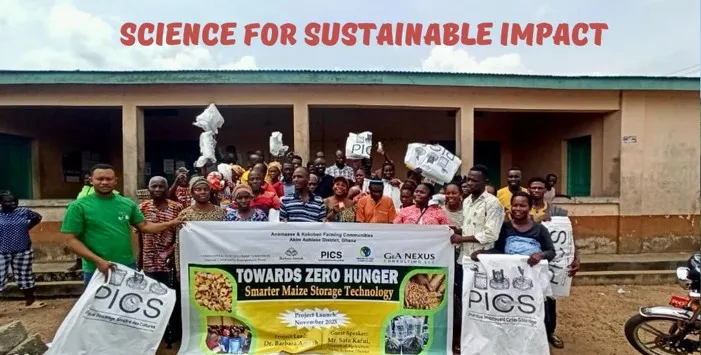
In November 2025, our team launched a post-harvest storage intervention in Akim Achiase, Ghana under the “Towards Zero Hunger” initiative, supported by Commonwealth Scholarship Commission through its Alumni Community Engagement Fund (ACEF). More than 80 farmers were trained in hermetic storage using Purdue University’s PICS bags. This technology creates an oxygen-limited environment that suppresses insect survival and reproduction over time, eliminating the need for insecticides.
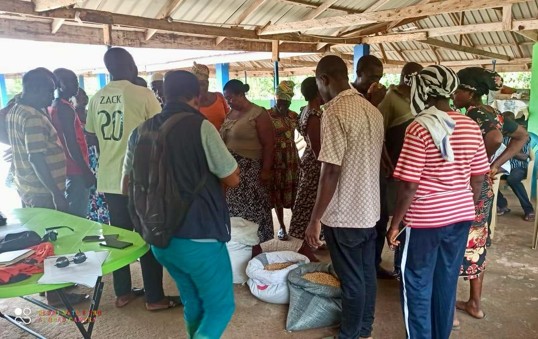
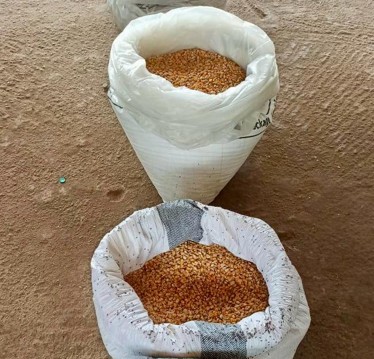
Rather than limiting the workshop to instruction alone, we established a simple side-by-side comparison between traditional bags and hermetic (PICS) bags, using maize from the same harvest, stored in the same environment, over the same period of time. This allowed farmers to evaluate outcomes under their own storage conditions.
Three Months Later… What We Observed
In February 2026, farmers reconvened to assess grain quality and insect damage in both bag types. Visible differences in grain condition and insect damage influenced the discussion in practical ways. Hermetic storage significantly reduced insect damage and preserved grain quality over the same period.
This outcome does not suggest that other management methods are inappropriate in all situations. In some production systems, different approaches may remain practical or necessary. What this evaluation demonstrated is that in this community where food safety concerns, market prices and timing pressures intersect, hermetic storage aligned well with local needs.
Sustainable impact depends on selecting interventions that fit the system in which they operate.
Small Adjustment, Broader Effect
Storage may seem like a minor part of the production cycle, but what happens after harvest influences household food security, potential exposure to chemical residues, income stability, bargaining power, and overall risk management.
When farmers are forced to sell immediately after harvest to avoid storage losses, prices are typically lowest. When storage improves, farmers gain more control over when and how they sell their produce. A focused adjustment at one point in the value chain can influence multiple outcomes across both economic and health dimensions.
This intervention intentionally focused on one leverage point — improving grain storage — and evaluated it under real conditions.
Sustainable agriculture often requires improvements that can be sustained over time.
Adoption Follows Alignment
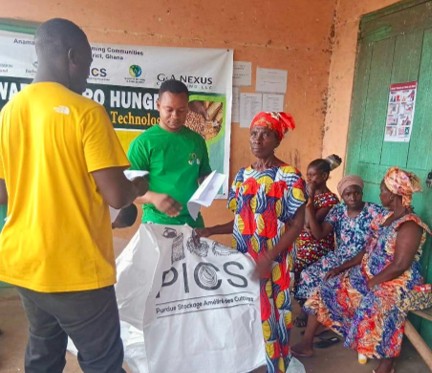
During the second workshop, each participating farmer received two PICS bags (with a combined storage capacity of approximately 200 kg of maize) to support independent use and evaluation. The focus was on thoughtful introduction rather than rapid expansion.
Farmers raised practical questions about reuse, durability, local availability, affordability, and access to reliable markets for their produce. These are the kinds of considerations that shape real adoption decisions.
For an intervention to last, it must fit existing practices, reduce rather than introduce risk, make economic sense, remain accessible, and produce results that people can see and trust.
Adoption strengthens when solutions align with daily realities.
We plan to revisit farmers who are independently using the bags in May 2026 to gather direct feedback and determine next steps. Continued evaluation helps ensure that the approach remains viable and sustainable over time.
Extending the Work
We are working to provide subsidized access to additional hermetic storage materials so farmers can safely store larger volumes of grain. Workshops are also being extended to neighboring communities. In parallel, we are exploring ways to support farmers in identifying reliable markets for their produce.
This initiative contributes to Sustainable Development Goal 2 (Zero Hunger) and aligns with broader food security and resilience efforts advanced by organizations such as FAO and global development partners. More importantly, it reflects the central idea of this newsletter:
Science generates insight, and sustainable impact depends on how that insight is applied within real systems.
Join the Conversation
If you work at the intersection of IPM, post-harvest systems, biological alternatives, food security strategy, or scalable agricultural design, I welcome the conversation.
If this perspective resonates, consider subscribing or sharing with someone working at the science–implementation interface.
Thank you for reading and being part of this community.
#SustainableImpact #FoodSecurity #IntegratedPestManagement #AgriculturalInnovation
Science for Sustainable Impact Newsletter is published monthly on the first of each month. Subscribe here.