Science For Sustainable Impact: Issue 6, June 2026
Effective pest management is not about choosing between productivity and environmental stewardship. It is about developing systems that support both. (theguardian.com).
June 1, 2026
Barbara Amoah, PhD, PMP
Three-Part Series: Balancing Pest Control and Pollinator Protection
Can we protect crops and pollinators at the same time?
In April, we published the first issue of this three-part issue where we examined the risks associated with neonicotinoids, particularly their persistence in the environment and potential impacts on pollinators.
In May, we explored why these products remain widely used despite those concerns, highlighting the challenges producers face in balancing pest pressure, productivity, and practical constraints.
This month, we address the final question in the series: How can producers protect crops while reducing risks to pollinators and other beneficial organisms?
The answer lies not in a single product or technology, but in integrating multiple strategies into a broader pest management framework.
Integrated Pest Management (IPM) provides that framework by combining prevention, monitoring, biological control, cultural practices, and targeted pesticide use to manage pests while minimizing unnecessary interventions.
From Products to Systems Thinking
Crop protection is often framed in terms of inputs, i.e. what product to use, when to apply it, and at what rate. However, managing pest risk effectively requires a shift from product-based decisions to system-based thinking. Integrated Pest Management (IPM) provides this framework. Rather than relying on routine or preventive chemical applications, IPM emphasizes:
- Understanding pest biology and life cycles
- Monitoring pest populations over time
- Using thresholds to guide intervention
- Integrating multiple control strategies
At its core, IPM is not a single tool. It is a decision-making process. IPM does not begin with a product. It begins with a problem.
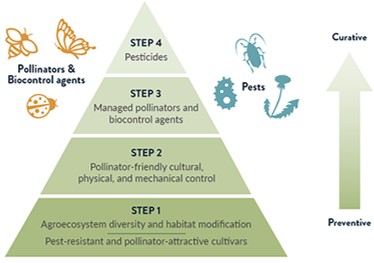
The goal is to identify the most effective combination of tools for managing that problem while minimizing unnecessary interventions and unintended consequences.
The principles of IPM are often visualized as a system in which multiple strategies work together to achieve both crop protection and environmental stewardship.
Rather than relying on a single intervention, IPM integrates monitoring, cultural practices, biological control, habitat management, and targeted pesticide use. This systems-based approach recognizes that effective pest management is often achieved through the interaction of multiple tools rather than dependence on any one solution.
Reducing Reliance on Preventive Inputs
One of the key implications of IPM is a reduced dependence on preventive, broad-spectrum approaches.
In the context of neonicotinoids:
- Seed treatments are used when justified by pest risk, rather than as routine practice.
- Interventions are triggered by observed pest pressure, not assumptions.
- Interventions are implemented only when the expected benefits outweigh the costs.
This shift helps to limit unnecessary exposure of non-target organisms, preserve beneficial insect populations, and reduce selection pressure for resistance.
By focusing on observed conditions rather than routine applications, IPM encourages more precise and targeted interventions when they are most likely to provide value.
The goal is not to eliminate pesticide use, but to ensure that interventions are justified and targeted.
The Role of Biological and Ecological Controls
IPM also emphasizes the role of natural systems in regulating pest populations. This includes:
- Predators such as lady beetles and lacewings
- Parasitoids that suppress pest populations
- Habitat features that support beneficial organisms
Practices such as maintaining habitat along field edges or incorporating flowering strips can enhance pollinator and natural enemy activity.
In some production systems, flowering strips are established within or alongside crop fields to provide habitat and floral resources while maintaining agricultural productivity.
Research suggests that these benefits can extend beyond conservation outcomes. In a multiyear field study, researchers found that an IPM-based approach reduced insecticide applications by approximately 95% while maintaining or enhancing crop yields through wild pollinator conservation. This finding highlights how ecological processes can contribute to both productivity and pest management objectives (Pecenka et al., 2021).
Where Neonicotinoids Fit Within IPM
One common misconception is that IPM and pesticide use are mutually exclusive. They are not.
Within an IPM framework, neonicotinoids may remain one tool among many. In some situations, seed treatments may provide valuable protection against economically important early-season pests. In other situations, monitoring data may indicate that treatment is unlikely to provide meaningful benefits. IPM helps determine which situation applies.
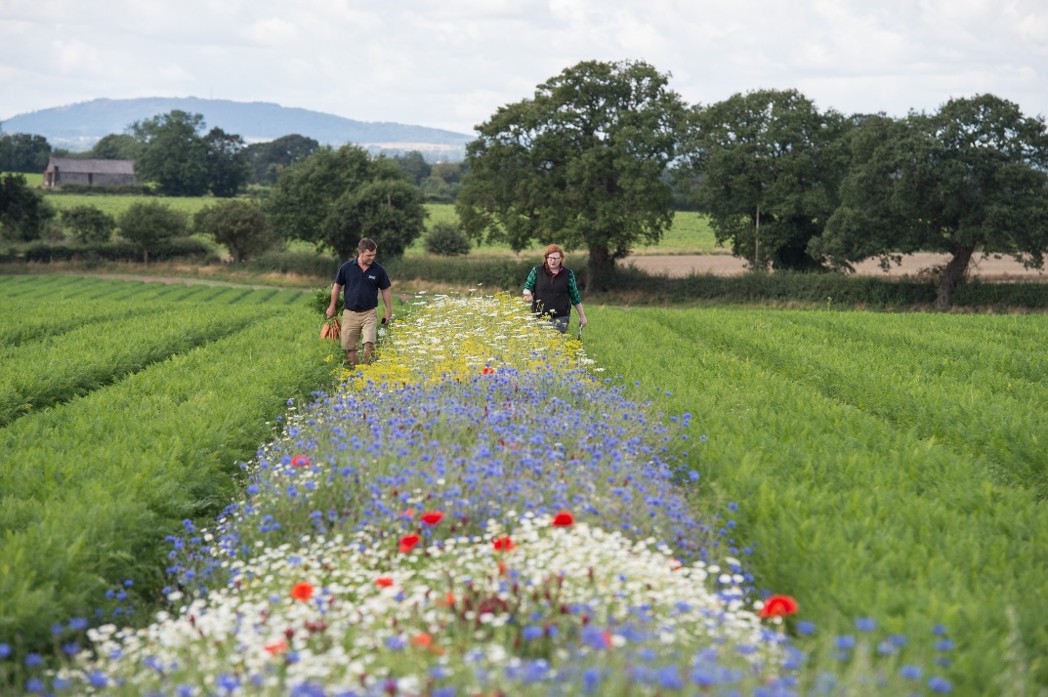
Flowering strips established within crop production systems can provide habitat and resources for pollinators and natural enemies, supporting biodiversity while contributing to broader IPM strategies. (Photo adapted from Rothamsted Research, UK).**
The objective is not necessarily to eliminate neonicotinoids, but to ensure that their use is justified, targeted, and integrated with other management practices. The focus shifts from routine use to informed use.
Precision in Chemical Use
Chemical controls remain available within IPM, but their use is guided by monitoring, thresholds, and risk-based decision-making rather than routine application.
Chemical control remains an important component of IPM, but its role changes. Instead of routine use, insecticides are applied at specific crop stages, in response to threshold-based decisions, and with consideration of timing to minimize non-target exposure. This approach aligns with increasing regulatory expectations and stewardship goals.
The focus shifts from whether to use chemicals to how they are used.
Barriers to Adoption
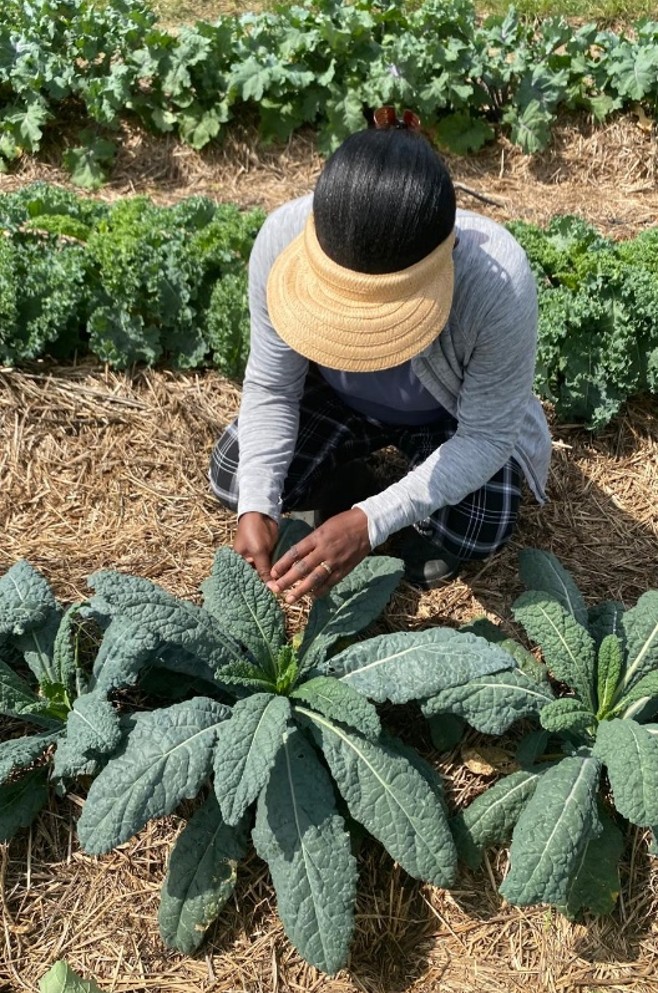
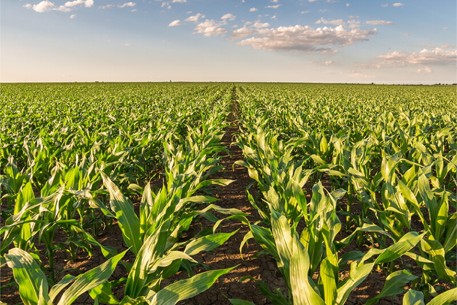
Healthy crop establishment and productivity remain central goals of pest management. Within an IPM framework, chemical control is used as one component of a broader strategy that balances crop protection with environmental stewardship (Photo adapted from AGWEB Farm Journal)**
Despite its advantages, IPM is not universally adopted.
Challenges include:
- Time and labor required for monitoring
- Variability in pest pressure across seasons
- Limited access to localized data
- Economic incentives that favor preventive approaches
In some systems, the perceived risk of not using preventive treatments outweighs the potential benefits of a more targeted approach.
Aligning Practice with Policy and Science
As regulatory scrutiny around pesticides increases, IPM is often positioned as a key pathway forward.
However, successful implementation requires alignment across research and extension, policy and regulation, farmer incentives and decision-making. Without this alignment, even well-established frameworks can be difficult to implement consistently.
The Bigger Picture
Across this series, a clear pattern emerges:
- April: Risk is real and system-wide
- May: Decisions are shaped by trade-offs
- June: Solutions require integration, not substitution
IPM does not replace existing management options; it reframes how they are used within a broader decision-making framework.
The broader lesson extends beyond a single pesticide class. Sustainable agriculture is rarely about choosing between productivity and environmental stewardship. Instead, it requires integrating practices that support both.
Emerging evidence suggests that well-designed IPM programs can reduce reliance on insecticides while maintaining strong production outcomes.
Looking ahead, the future of crop protection will depend on:
- Better data and monitoring systems
- More precise application technologies
- Greater integration of biological, cultural, and chemical approaches
As these technologies continue to evolve, their greatest value may lie in helping producers apply IPM principles more effectively across diverse agricultural systems.
Let’s Continue the Conversation
Throughout this series, we have explored the risks associated with neonicotinoids, the reasons they remain widely used, and the role of IPM in balancing effective pest management with environmental stewardship.
What do you see as the biggest challenge to broader adoption of IPM?
- Time and labor requirements
- Economic risk and uncertainty
- Access to data, monitoring, and decision-support tools
- Policy and incentive structures
- Something else?
I welcome your perspective.
References
- Pecenka, J. R., Ingwell, L. L., Foster, R. E., Krupke, C. H., & Kaplan, I. (2021). IPM reduces insecticide applications by 95% while maintaining or enhancing crop yields through wild pollinator conservation. Proceedings of the National Academy of Sciences, 118(44), e2108429118.
- Utah State University Extension. Integrated Pest and Pollinator Management.
- The Guardian Sustainable Farming Feature. Stripes of wildflowers across farm fields could cut pesticide spraying
- Rothamsted Research, UK. The Big Picture: Using Wildflower Strips for Pest Control
- AGWEB Farm Journal
#IntegratedPestManagement #IPM #CropProtection #PollinatorConservation #Agriculture #Entomology
#SustainableAgriculture #PestManagement
Science for Sustainable Impact Newsletter is published monthly on the first of each month. Subscribe here.