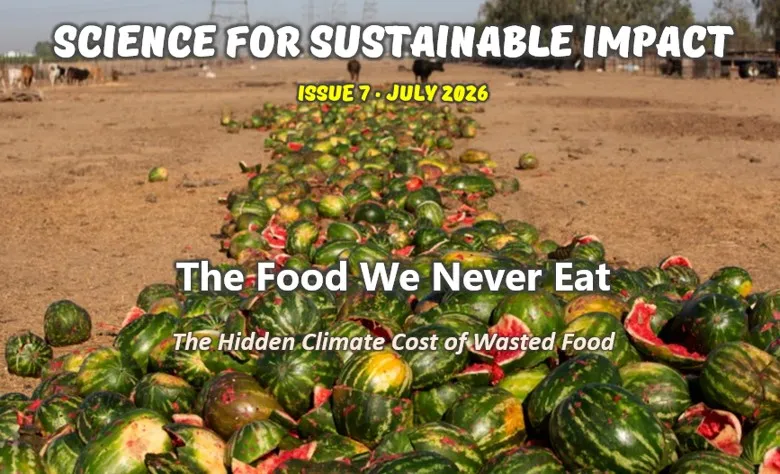
Science For Sustainable Impact: Issue 7, July 2026
A third of everything we grow is lost or wasted - and the climate is quietly paying the bill.
July 1, 2026
Barbara Amoah, PhD, PMP
Every single day, the world throws away more than one billion meals. Not over a year - in a SINGLE DAY! In 2022, humanity wasted an estimated 1.05 billion tons of food, roughly a fifth of everything available to eat. Add in all the food lost before it ever reaches a store, and close to a third of what we grow is never eaten.
A third of everything we grow is lost or wasted - and the climate is quietly paying the bill.
A problem hiding in plain sight
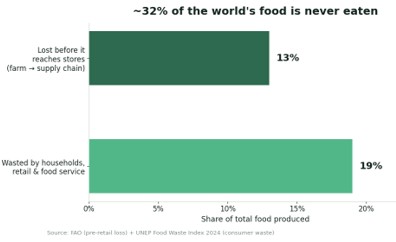
The numbers split into two halves. Around 13% of food is lost between the farm and the shop in storage, transport, and handling. Another 19% is wasted further down the chain, in retail, restaurants and homes. Households are the single biggest source, responsible for about 60% of consumer waste. And this is not just a wealthy-country habit: per-person household waste barely varies with national income. High- and middle-income countries differ by only about 7 kg per person a year.
A surprising share of this waste is driven by appearance. Our demand for ‘perfect’ fruit and vegetables means produce that is misshapen, blemished or simply unfashionable is discarded long before it reaches a plate, damaging the climate and leaving people hungry. In the United States alone, an estimated 30-40% of the food supply goes uneaten.
The climate cost nobody talks about
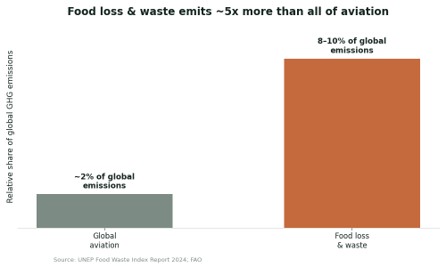
Here is the part that should stop us in our tracks. Food loss and waste is responsible for 8-10% of all global greenhouse gas emissions. This is almost five times the footprint of the entire aviation industry. If wasted food were a country, it would be the third-largest emitter on Earth, behind only China and the United States.
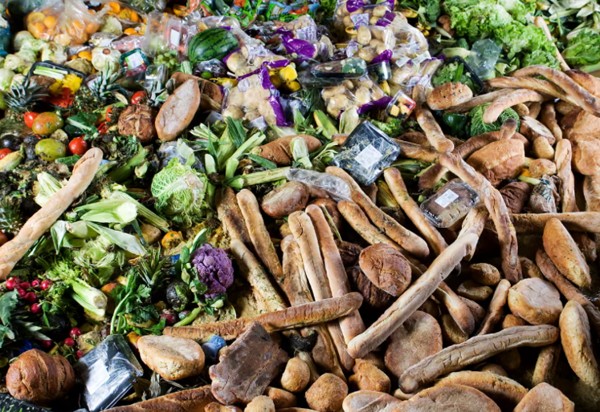
The reason is simple. Every wasted tomato carries the hidden cost of the water, land, fertilizer, fuel and labor used to grow it. And when food rots in landfill, it releases methane, a gas roughly 80 times more potent than carbon dioxide over a 20-year span. In the United States, discarded food is the single largest component of what ends up in landfill and incinerators.
We are heating the planet to produce food and then heating it again to throw that food away.
Where I see it start
As an entomologist, I spend a lot of time looking at the part of this problem most people never see: what happens to food after harvest but before it reaches us? In many regions, enormous quantities of grain and produce are lost in storage to pests, mold and poor temperature control. Protecting food once it is already grown has been a thread running through my entire career.
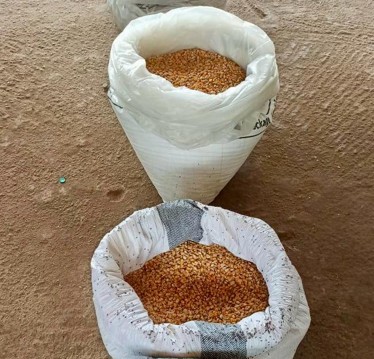
The encouraging news is that postharvest loss is one of the most solvable problems in the whole food system. Better drying and sealed storage, simple cold chains, and improved handling can rescue food that has already been produced with no extra land, water or emissions required.
We are not always short of food. Sometimes we are simply short of ways to keep it.
What actually moves the needle
The science points to an unglamorous truth: the biggest wins are boring. Improved storage and cold chain. Clearer date labels - the confusion between “best before” and “use by” pushes millions to bin perfectly safe food. Smarter redistribution of surplus. And above all, measurement, because you cannot manage what you never count.
Halving food waste is one of the rare climate strategies that saves money while cutting emissions and feeding more people at the same time. It is, in the truest sense, a triple win and one we are still badly underusing.
The bottom line: We pour enormous energy into debating how to grow more food, and far too little into protecting the food we already have. For me, that is the most overlooked lever in the entire sustainability conversation.
Let’s work together - I research and speak on building resilient, low-waste food systems, from the science of postharvest protection to the policy of food-system change. If your team, conference or classroom is wrestling with these questions, I’d love to talk.
Where do you see the most food wasted in your own world? Tell me in the comments. I read every reply.
#FoodWaste #Sustainability #FoodSecurity #ClimateAction #PostharvestLoss #FoodSystems
Sources: UNEP Food Waste Index Report 2024, UNEP - over 1 billion meals a day, FAO SDG 12.3.1 food loss, UNFCCC - 8-10% of emissions, US EPA - From Farm to Kitchen, US FDA - Food Loss and Waste, IPCC AR6 GWP values.
Science for Sustainable Impact Newsletter is published monthly on the first of each month. Subscribe here.