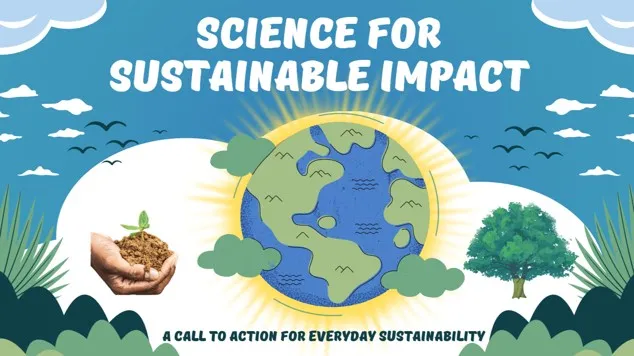
Science For Sustainable Impact: Issue 1, January 2026
Introduction: How Science Meets the Real World to Create Durable Impact
January 2, 2026
Barbara Amoah, PhD, PMP
Why this newsletter exists
We don’t have a knowledge problem; we have an integration problem. While scientific breakthroughs accelerate, our ability to apply them to food security and climate resilience is lagging. Many of today’s most pressing challenges such as food security, environmental resilience, public health, climate adaptation, are not limited by a lack of scientific knowledge. They are limited by how that knowledge is applied, integrated, and sustained once it meets real-world systems.
Science for Sustainable Impact was created as a space to explore that intersection: where evidence meets context, decisions, and consequence.
This newsletter is not about a single discipline, sector, or solution. It is about how scientific knowledge across fields moves from theory into practice, and what determines whether it ultimately creates lasting impact.
Science as a shared language
Science is a shared language. Entomology, chemistry, soil science, toxicology, ecology, data science, and behavioral science, etc. all operate within the same systems that shape food systems, environmental health, and human well-being. In practice, outcomes are rarely driven by one discipline alone. Real-world challenges are inherently interdisciplinary. Biological processes interact with chemical properties, environmental conditions, economic incentives, regulatory frameworks, and human behavior. When these interactions are ignored or oversimplified, well-intentioned solutions often fall short.
Treating science as a shared language allows us to better understand complexity and design responses that hold under real conditions.
Where impact often breaks down
Across sectors, similar patterns appear again and again:
- strong evidence that struggles to translate into action
- innovations that perform well in controlled settings but falter in practice
- solutions designed without sufficient attention to incentives, constraints, or decision environments
These breakdowns are not failures of science itself. They are failures of integration, context, and design. Understanding why impact breaks down and how it can be strengthened requires looking beyond disciplinary boundaries and toward the systems in which decisions are made.
A perspective shaped by applied work
My own work has consistently lived at the intersection of disciplines and contexts. While my training is in entomology and applied pest management, the questions that matter most rarely belong to one field alone.
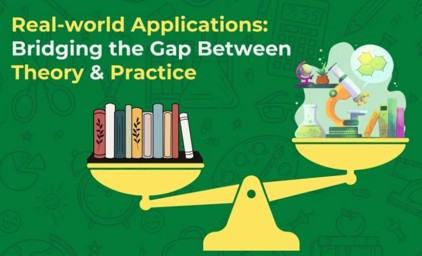
Often, the most effective approaches are not the most complex or novel. They are the ones that can be understood, adapted, and sustained within the systems they are meant to serve.
That perspective informs how I think about impact and how this newsletter will approach its topics.
What to expect from future issues
Future issues will explore questions that sit at the intersection of science, systems, and decision-making. Topics may draw from agriculture, environment, health, or other sectors, and may engage with ideas from a range of scientific and analytical perspectives as they become relevant.
Rather than focusing on disciplines, this newsletter will focus on patterns:
- why some ideas translate into durable impact while others stall
- how complexity, uncertainty, and incentives shape outcomes
- what it takes to design solutions that work under real-world constraints
The unifying thread will be an interest in how knowledge moves from evidence to action, and what strengthens or weakens that journey.
An open invitation
If you work in research, policy, education, industry, or implementation and you are interested in how science holds up in real systems, this space is for you. My hope is that this newsletter becomes a place for thoughtful reflection, cross-disciplinary dialogue, and shared learning about what it truly takes to turn knowledge into meaningful, sustained impact.
Science for Sustainable Impact Newsletter is published monthly on the first of each month. Subscribe here.